
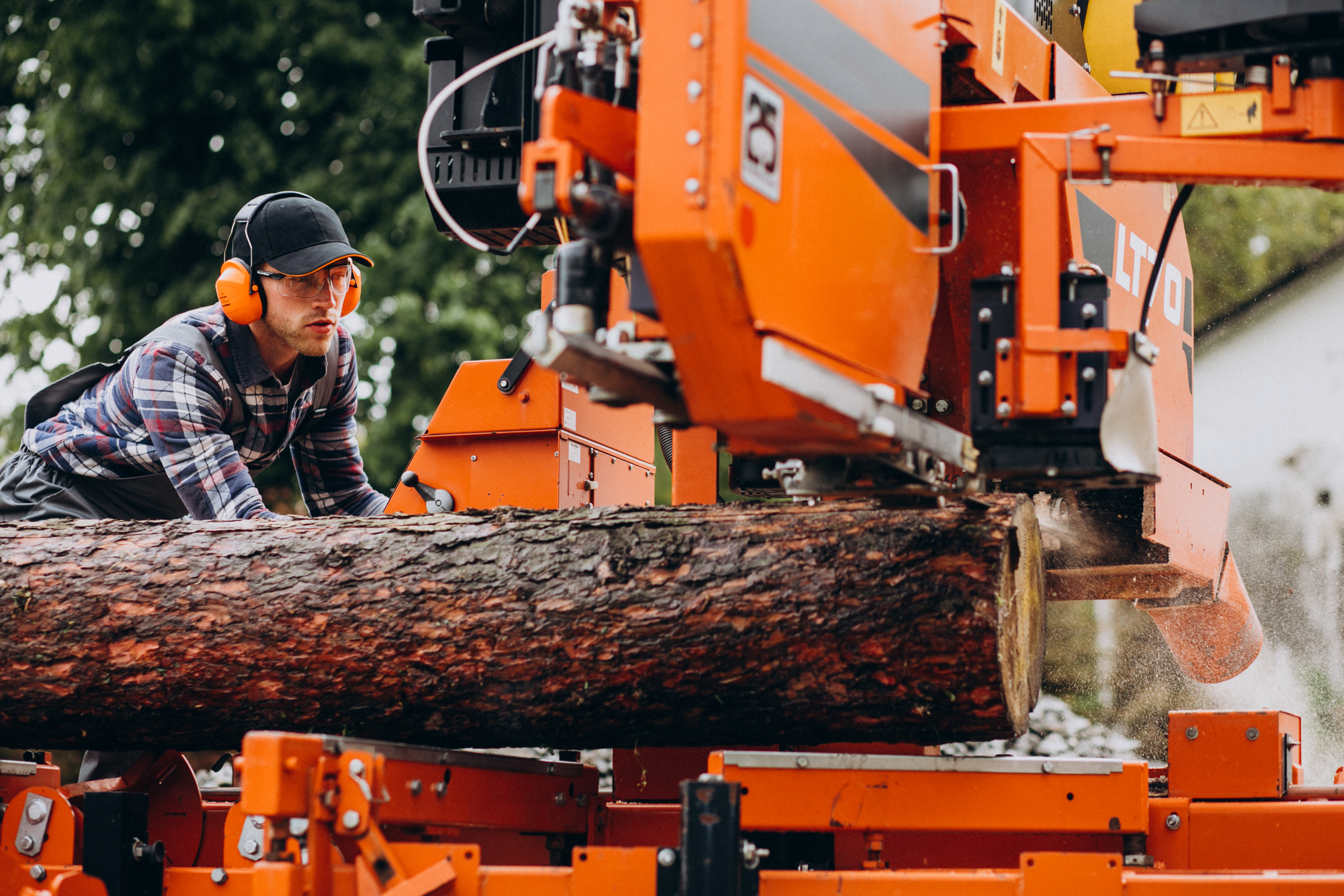
Clearing a wooded lot is not just about cutting trees down. Local tree removal professionals approach it in the right order, with the right equipment, so the property is actually ready for what comes next, whether that is a foundation, a driveway, or a structure, without leaving behind stumps, debris, or conditions that slow down the build.
If you are preparing land in Covington or the surrounding Newton County area for a new home or outbuilding, this is what the process looks like and what to think through before hiring a crew.
What Residential Land Clearing Actually Involves
Land clearing for residential construction typically covers tree removal across the build footprint, clearing of brush and understory growth, debris management, and in some cases grading preparation. The scope depends on how densely wooded the lot is, what the builder or contractor needs cleared before breaking ground, and whether the full lot or only a portion needs to be opened up.
Most residential clearing jobs in the Covington area involve a mix of species, including loblolly pines, water oaks, sweet gums, and sometimes older hardwoods. Each species comes down differently, and the layout of the lot affects how trees can be felled and where equipment can position safely.
Start With a Clear Scope
Before any trees come down, confirm with your builder or contractor exactly what needs to be cleared and what needs to stay. Builders often want certain trees preserved, such as mature shade trees near the planned footprint or buffer vegetation along a property line, and removing them by mistake creates problems that are not reversible.
Get the clearing scope in writing from your contractor before scheduling tree work. That scope becomes the job brief for our crew and prevents any ambiguity about what is included.
Equipment Access and Lot Conditions
Newton County lots vary significantly in terrain. Flat, open ground is the easiest scenario. Sloped lots, lots with seasonal wet areas, or properties with tight access from the road require equipment that can handle those conditions without getting stuck or causing additional damage to the site.
Our Ditch Witch SK800 Mini Skid Steer handles confined and sloped terrain that standard clearing equipment cannot navigate cleanly. On residential lots where the cleared area is near existing structures, fences, or neighboring properties, compact equipment gives us control over where material falls and how debris is managed.
Tree Removal Across the Clearing Zone
Tree removal during land clearing follows the same safety standards as any residential removal, with staged cuts, controlled directional felling where space allows, and debris management at each stage rather than letting it pile up across the site.
For a new build, the cleared zone typically includes the foundation footprint plus setbacks for equipment access during construction. Trees on the perimeter may need trimming rather than full removal to bring canopy away from the build zone without losing the tree entirely.
Stump Handling After Clearing
Stumps are a separate consideration from tree removal, and this is worth understanding before you get quotes. For smaller stumps, generally 10 inches or under in diameter, we handle grinding as part of the job. For larger stumps, we refer to our partner Robert’s Stump Removal Service at (404) 216-2962. They are a dedicated stump specialist and handle the work more efficiently than a general tree crew would.
Builders typically require stumps to be ground to a specified depth below grade, often 6 to 12 inches, before foundation work begins. Confirm that depth requirement with your contractor before scheduling stump work so it only needs to happen once.
Debris Management and Cleanup
A clearing job generates significant volume. Cut timber, brush, and chips all need somewhere to go. The options are hauling debris off-site, chipping it on-site and leaving chips for the property, or a combination of both depending on what the owner and builder want.
Wood chips generated during clearing have real value as ground cover and erosion control on a fresh lot. We work with ChipDrop, which coordinates wood chip delivery and placement, so material from your job can be put to use rather than trucked to a landfill.
What to Confirm Before Scheduling
Before we schedule a clearing job, a few things need to be confirmed on your end.
Confirm the clearing scope with your builder in writing. Know which trees stay and which come down.
Check with Newton County or the City of Covington on any applicable grading or land disturbance permits. Clearing for construction often triggers a land disturbance permit requirement at the county level, separate from tree removal, and obtaining it is the property owner’s responsibility.
Mark any underground utilities before the crew arrives. Call 811, Georgia’s free utility locate service, at least three business days before any ground disturbance. This protects both the crew and your infrastructure.
Getting an Estimate for Land Clearing in Covington
We provide free on-site estimates for residential land clearing across Covington, Oxford, Loganville, and the surrounding Newton and Walton County area. We carry $2 million in general liability insurance and Workers’ Compensation coverage, and proof is available before any work is scheduled.
Call (404) 274-5790 or email Thomastreesolutions@gmail.com to set up an estimate. Bring your builder’s clearing scope to the walkthrough if you have it; it makes the estimate more accurate and the job cleaner.
Related Topics:
- Emergency Tree Removal in Covington, GA: Steps to Take After a Storm
- How Crown Raising Improves Clearance for Homes and Driveways in Covington